
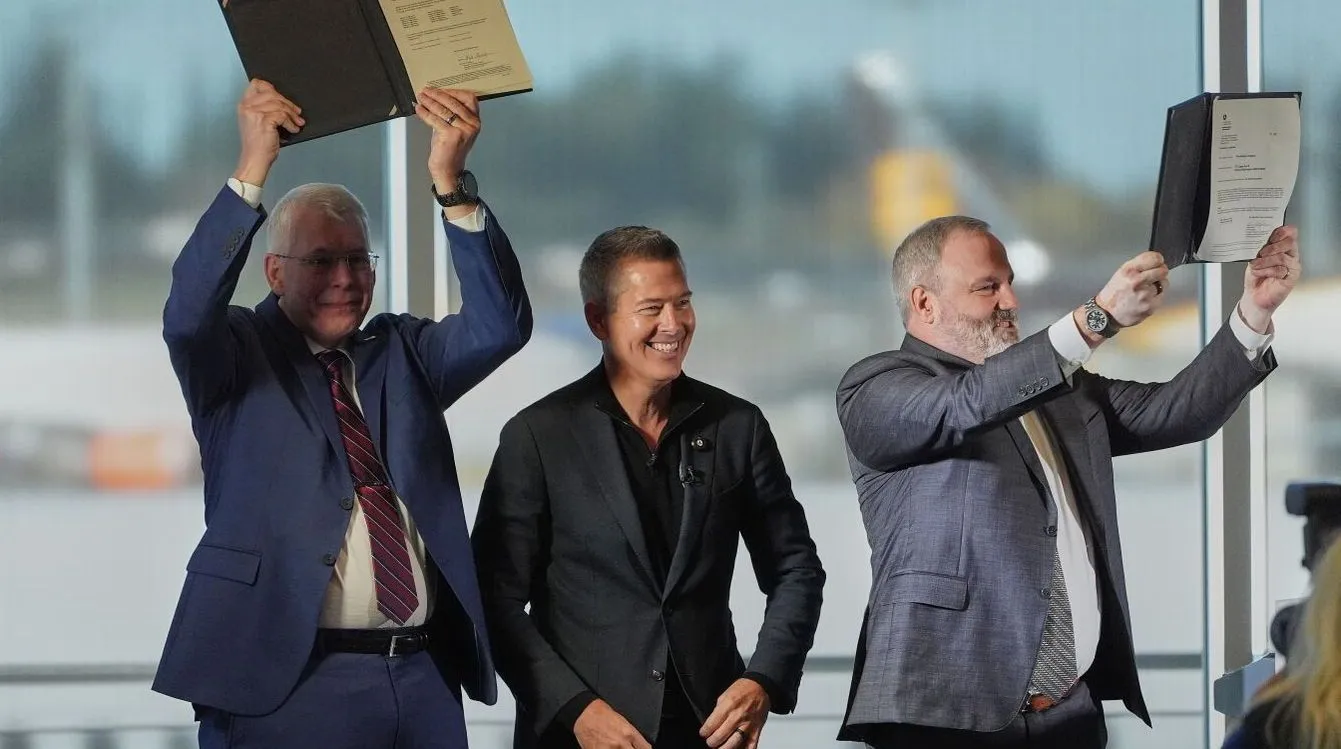
Boeing has finally crossed a critical finish line in its long struggle to modernize its fleet, as the Federal Aviation Administration officially certified the 737 Max 10 for passenger service on Tuesday. The announcement came during a ceremony at the company’s Everett, Washington facility, where U.S. Transportation Secretary Sean Duffy presented the certification to Boeing engineers. Duffy noted that the process involved thousands of hours of rigorous test flights and extensive safety reviews, jokingly remarking that everyone involved likely had fewer gray hairs when the project began nearly a decade ago.
The approval arrives at a pivotal moment for Boeing as it attempts to rebuild its shattered reputation following years of quality control scandals and tragic accidents. After the devastating crashes of the Max 8 and a high profile door plug blowout on a Max 9 in early 2024, the aerospace giant has been under intense federal scrutiny. By clearing the Max 10, the FAA provides Boeing with a vital tool to recover financially and reclaim territory in the competitive narrow-body market from its primary rival, Airbus.
For airlines like United, Delta, and Ryanair, the arrival of the Max 10 is about efficiency and capacity. Designed to carry between 185 and 210 passengers, the jet allows carriers to move more people per flight while reducing fuel consumption compared to older models. This becomes especially critical as airlines grapple with soaring fuel costs driven by geopolitical instability in the Middle East. While competitors currently offer slightly longer range options, Boeing believes its focus on fuel economy will make the Max 10 an attractive choice for domestic and short haul international routes.
Despite the celebration, Boeing still faces an uphill climb toward full operational normalcy. Stephanie Pope, head of Boeing Commercial Airplanes, hailed the certification as a milestone in the company’s recovery and expressed confidence that it would set a new industry standard. However, delivering these planes remains a challenge; with over 1,500 orders currently sitting in the backlog across thirty different customers, Boeing cannot simply flip a switch. Each individual aircraft must still pass strict inspections before entering service, with first deliveries expected to reach airlines in 2027.